Repair or Replace: How We Help You Decide
Age is not the deciding factor. What a technician measures on your unit is.
August 26, 2026 · 4 min read
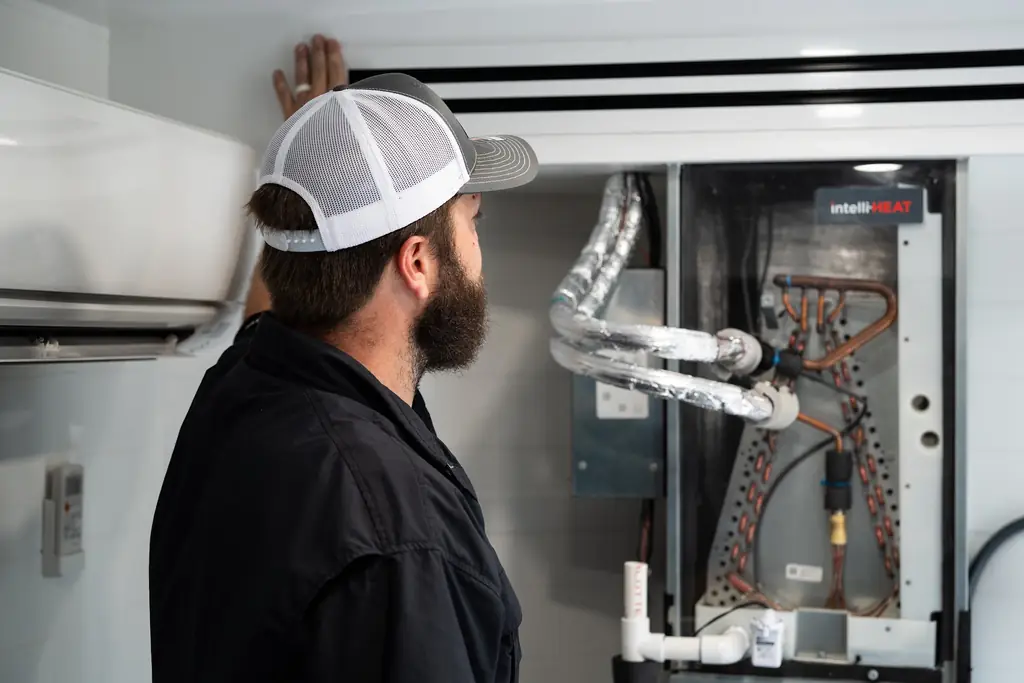
A thirteen year old air conditioner that will not hold a set temperature puts a homeowner in the same position every summer in Montgomery County: fix what is there, or take on the cost of a full system. There is no single rule that answers it correctly for every house, and any company that gives you an answer before they have opened up your unit is guessing. What actually settles the question is a short list of specific things a technician measures, not the number printed on a data plate.
Why age alone does not decide it
It is tempting to treat a unit's age as the whole story. A system that has run for ten or more years is more likely to have wear across several components at once, and that raises the odds that one repair today is followed by a different one next season. But age by itself does not tell you whether the compressor, the coil, and the electrical components are actually failing, or whether one part quit while the rest of the system is fine. We have gone into homes expecting to write up a full replacement and found a single failed capacitor instead, a fifteen minute fix on a system with plenty of life left in it. The nameplate date is a clue. It is not the diagnosis.
What we actually check before recommending anything
Before anyone on our crew tells you to repair or replace, we look at what the system is actually doing. That means checking refrigerant behavior against what the unit was designed to run, reading the electrical draw on the compressor and comparing it to the nameplate rating, and looking at the condition of the coil and the line set for corrosion or damage that a filter change will not fix. On an older system we also weigh how available parts are for that specific model. A straightforward part failure on a common system is usually worth fixing outright. A compressor that is drawing well outside its rated amperage on a unit that is already past its expected service life tells a different story.
When a repair is the right call
Most of the calls we run are exactly what they look like: a single component failed, the rest of the system tests fine, and a repair gets the house cool again for a reasonable cost. Capacitors, contactors, blower motors, and refrigerant leaks at a fitting are common, fixable, and do not by themselves justify replacing a whole system. If your unit is younger than ten years old, or if it is older but every other reading comes back healthy, repair is almost always the more sensible route, and it is the one we recommend.
When replacement makes more sense
Replacement earns its place when the numbers stop adding up in the repair's favor. A compressor failure on an older unit is the clearest example, since a compressor replacement can run close to the cost of a new system while leaving you with an old coil and old electronics around it. Frequent repeat repairs on the same system inside a short window is another sign, since it usually means the system is failing broadly rather than in one place. In those cases we walk you through what a new system costs, including financing through Synchrony and the option to spread an installation to as low as fifty dollars a month, so the decision is not made harder by not knowing the numbers.
Getting a second opinion
If a repair or replace recommendation feels rushed, or comes with no explanation of why, it is reasonable to ask for the readings behind it, or to get someone else to check before you commit to either option. We are used to being that second opinion for homeowners who already had another company tell them to replace, and more than once it has turned out that all the compressor needed was a new capacitor, or that the leak was small enough to seal and recharge without touching the rest of the system. A recommendation should survive being questioned. If it does not, that is worth noticing.
What no pressure looks like in practice
One of our recent customers had a technician come out after hours on a thirteen year old unit, and instead of pushing a sale, he explained exactly what was wrong, discussed the future without pressure, and showed the vendor pricing so the numbers were transparent from the start. That is the standard we hold every visit to. Whether the answer ends up being a forty dollar part or a full system, you should leave the conversation understanding why, with the readings that led to it, not just a recommendation to trust.
Affordable Air Repair, (936) 446-9329
Call (936) 446-9329More articles
What a Real AC Diagnosis Actually Looks Like
The readings a technician takes on your system are the difference between a guess and a fix.
Mini Splits for Texas Shops, Garages, and Additions
Where ductless systems genuinely make sense, and what installing one actually involves.