What a Real AC Diagnosis Actually Looks Like
The readings a technician takes on your system are the difference between a guess and a fix.
August 26, 2026 · 3 min read
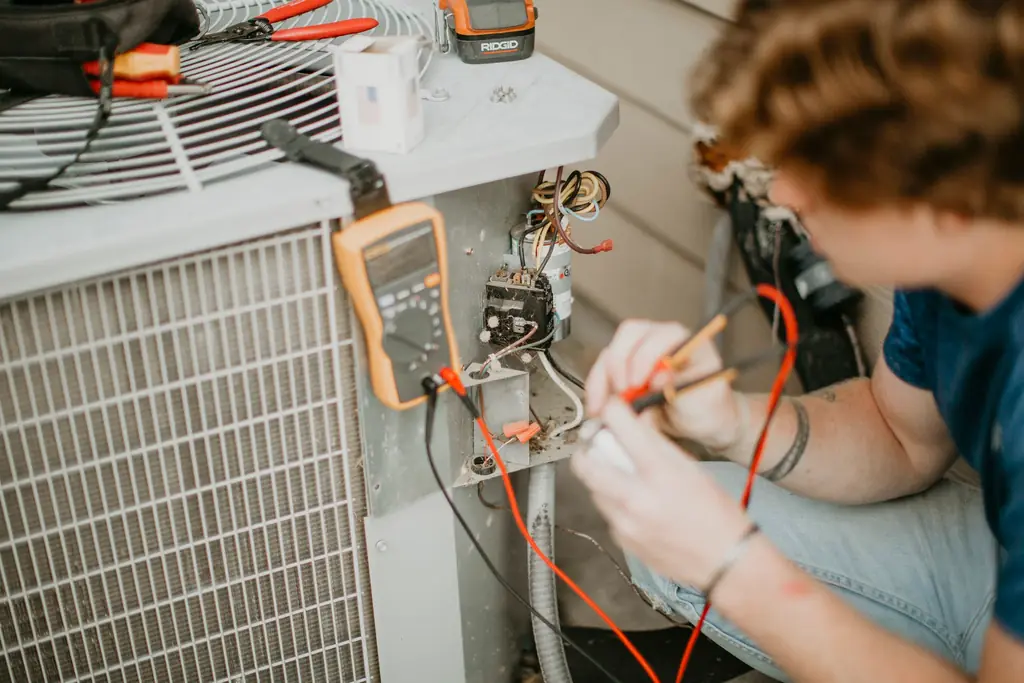
Ask five different companies to look at a struggling AC system and you will sometimes get five different answers, because not everyone is measuring the same things before they speak. A proper diagnosis is not a guess dressed up in confidence. It is a short set of readings taken with real instruments, each one narrowing down what is actually wrong before a single part gets replaced.
Why a diagnosis is a set of numbers, not a guess
A technician who walks in, feels the air at the vent, and announces the system needs a new compressor has skipped most of the actual work. The readings exist because symptoms overlap. Weak airflow, warm air, and a system that will not stop running can all point to several different causes, and the only way to tell them apart is to measure rather than assume. That is the reason our technicians carry a multimeter and a set of gauges to every call, not just a screwdriver.
Temperature split
Temperature split is the difference between the air going into the system at the return and the air coming out at the supply. It is one of the fastest ways to tell whether a system is actually removing heat the way it should. A split that reads too small usually points toward an airflow or refrigerant problem rather than an electrical fault, while a split that is unusually large can point to airflow being restricted somewhere in the ductwork. On its own the number does not name the part, but it tells a technician which direction to look before opening anything up.
Amp draw against the nameplate
Every compressor and motor has a rated amp draw printed on its own nameplate, the number the manufacturer expects it to pull under normal load. Reading the actual draw with a clamp meter and comparing it against that number is one of the more reliable ways to catch a motor or compressor that is working harder than it should, often before it fails outright. A draw that runs high against the rating is a warning sign worth taking seriously, and it is one of the readings that most directly separates a straightforward repair from a component that is genuinely wearing out.
Static pressure
Static pressure measures how hard the system's blower is working to push air through your ductwork. High static pressure usually means the ducts are undersized, restricted, or poorly designed somewhere in the run, which forces the blower to work harder than it should and can shorten the life of the whole system over time. Because Affordable Air Repair does custom duct design as part of its regular work, static pressure is a reading we take seriously rather than skip past. A system can be mechanically sound and still perform poorly because of what the ductwork is doing to it.
Refrigerant behavior
Refrigerant does not simply run low the way a fluid does in a car. In a sealed system, low refrigerant almost always means there is a leak somewhere, and topping it off without finding the leak is a temporary fix at best. A technician checking refrigerant behavior is looking at pressures on both the high and low side of the system and comparing them against what that specific system was designed to run at, which tells them whether the system is undercharged, overcharged, or behaving normally for the outdoor conditions that day.
How the readings work together
None of these four readings mean much read alone. A weak temperature split paired with a normal amp draw points toward airflow or refrigerant rather than the compressor itself. A high amp draw paired with a normal temperature split can mean a motor is wearing out even while the system still cools the house adequately today. Reading them together, rather than reacting to the first number that looks off, is what keeps a technician from replacing a part that was never the actual problem, and it is why a proper diagnosis takes longer than a five minute look at the outdoor unit.
Why we explain the readings, not just the fix
None of these readings mean much to a homeowner on their own, which is exactly why we walk you through them rather than handing you a number and a bill. Jehu Trumbly, who has run Affordable Air Repair since 2018, says the job is as much about educating customers on how a system should be installed, serviced, and maintained as it is about the repair itself. That is the difference between a fix you have to trust blindly and one you actually understand.
Affordable Air Repair, (936) 446-9329
Call (936) 446-9329